



GANESHA JEWELLERY
Overcoming obstacles, finding solutions – Ganesha, bringer of good fortune

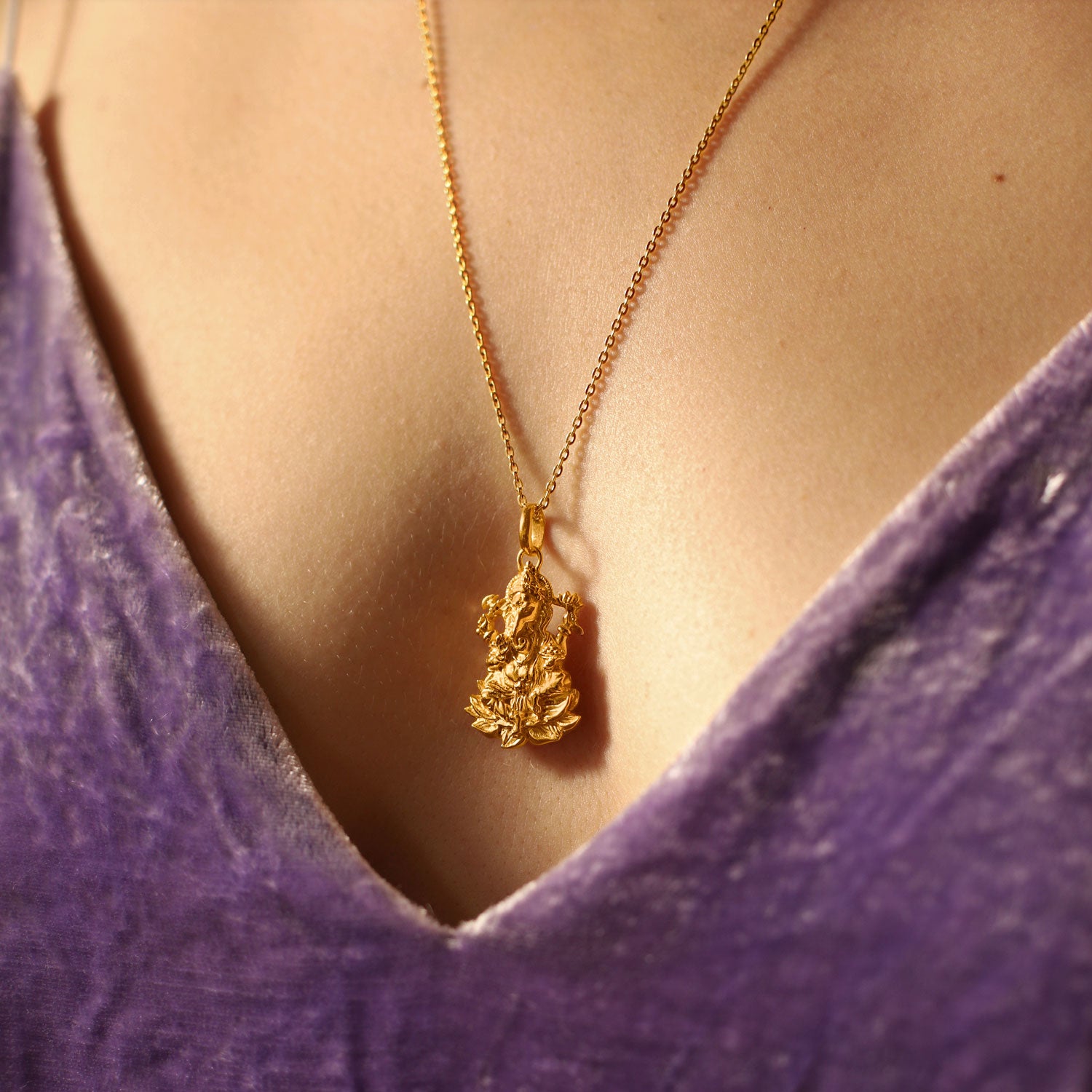
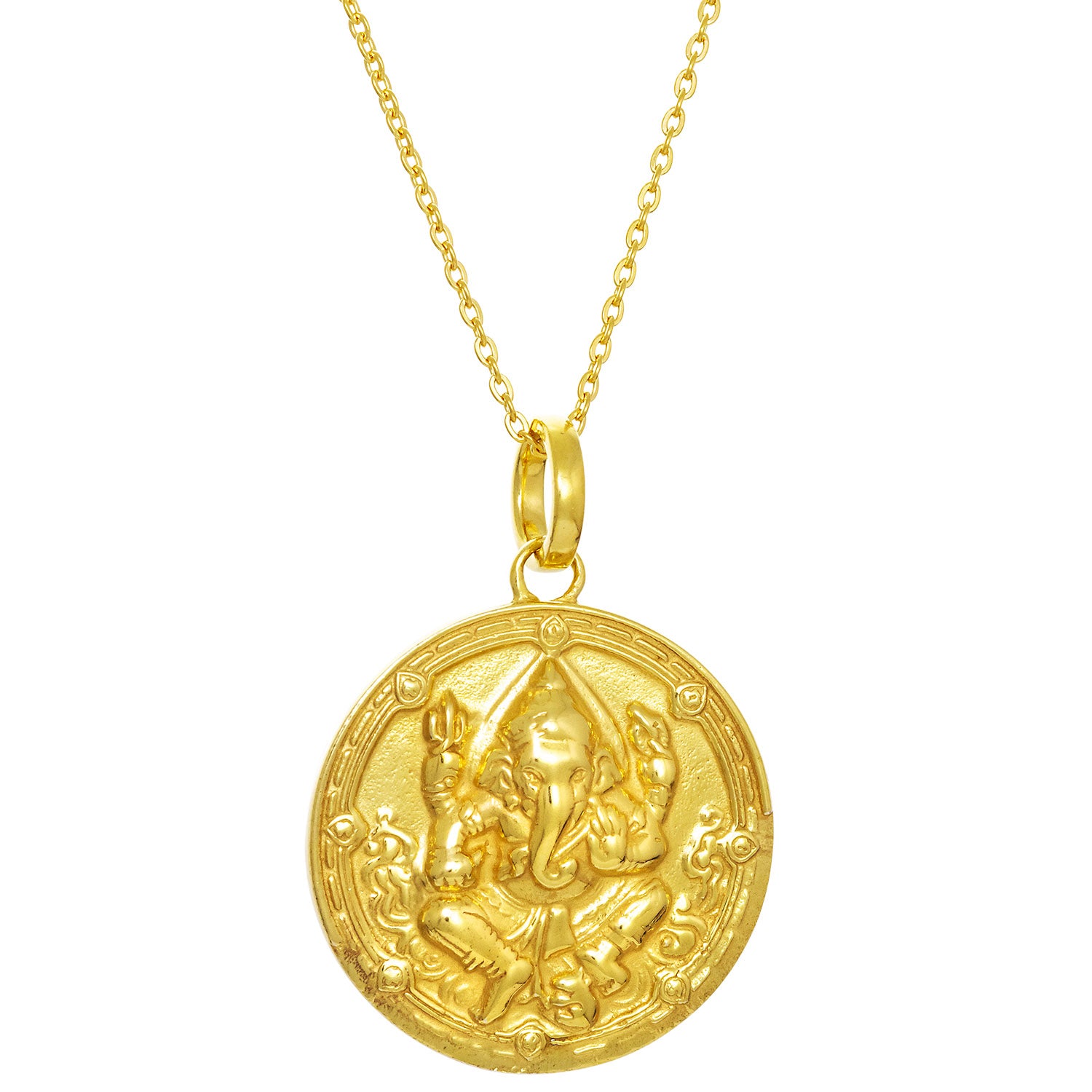


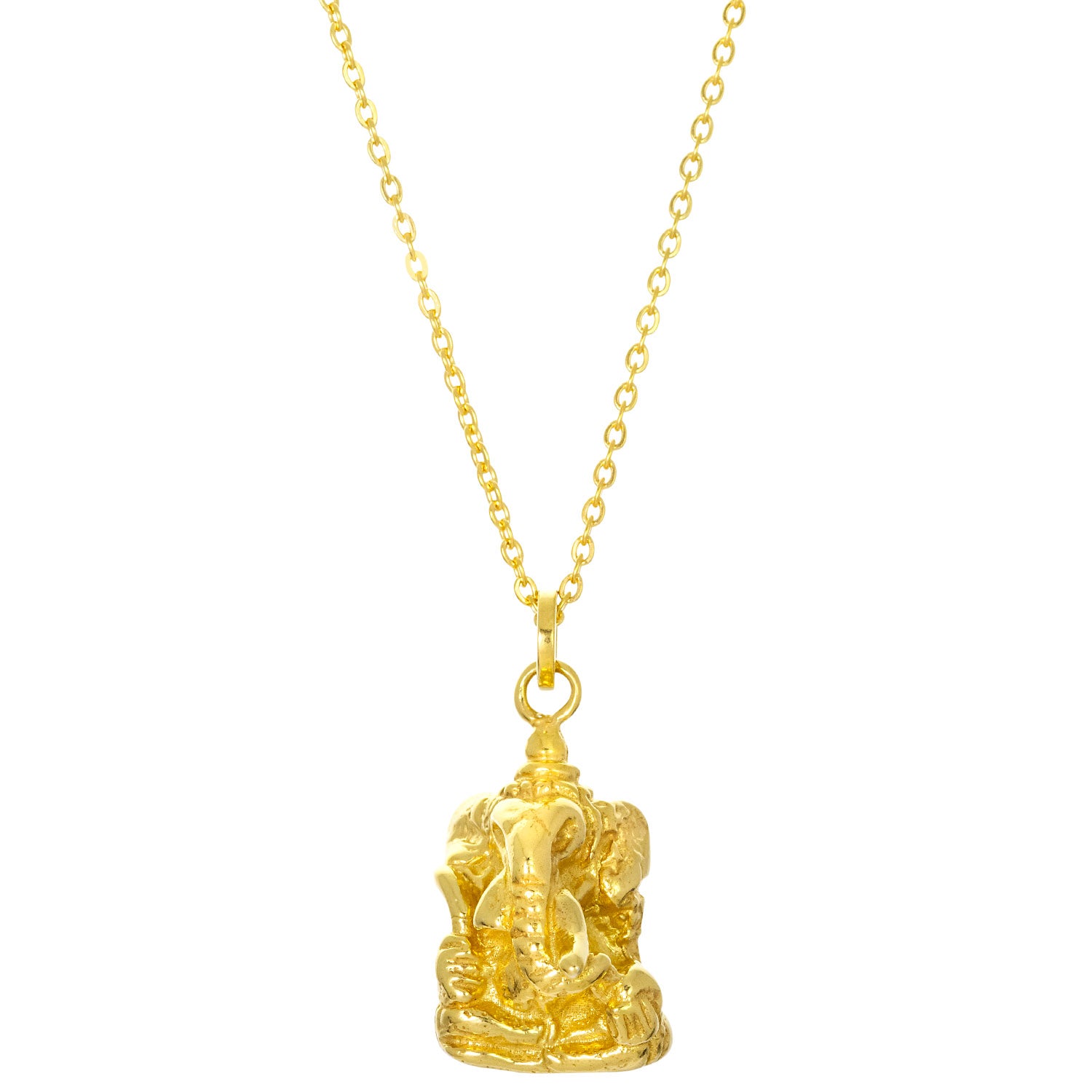
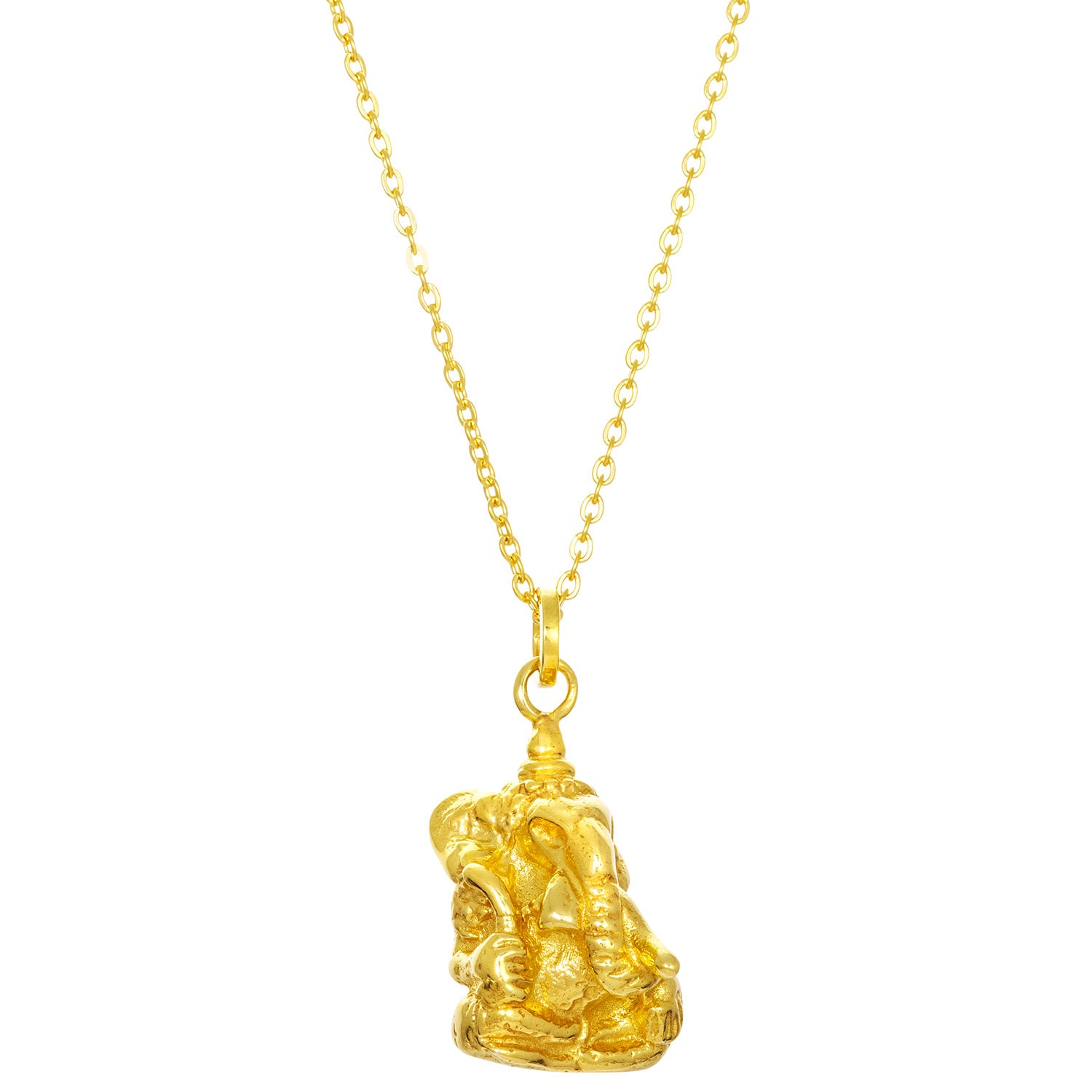

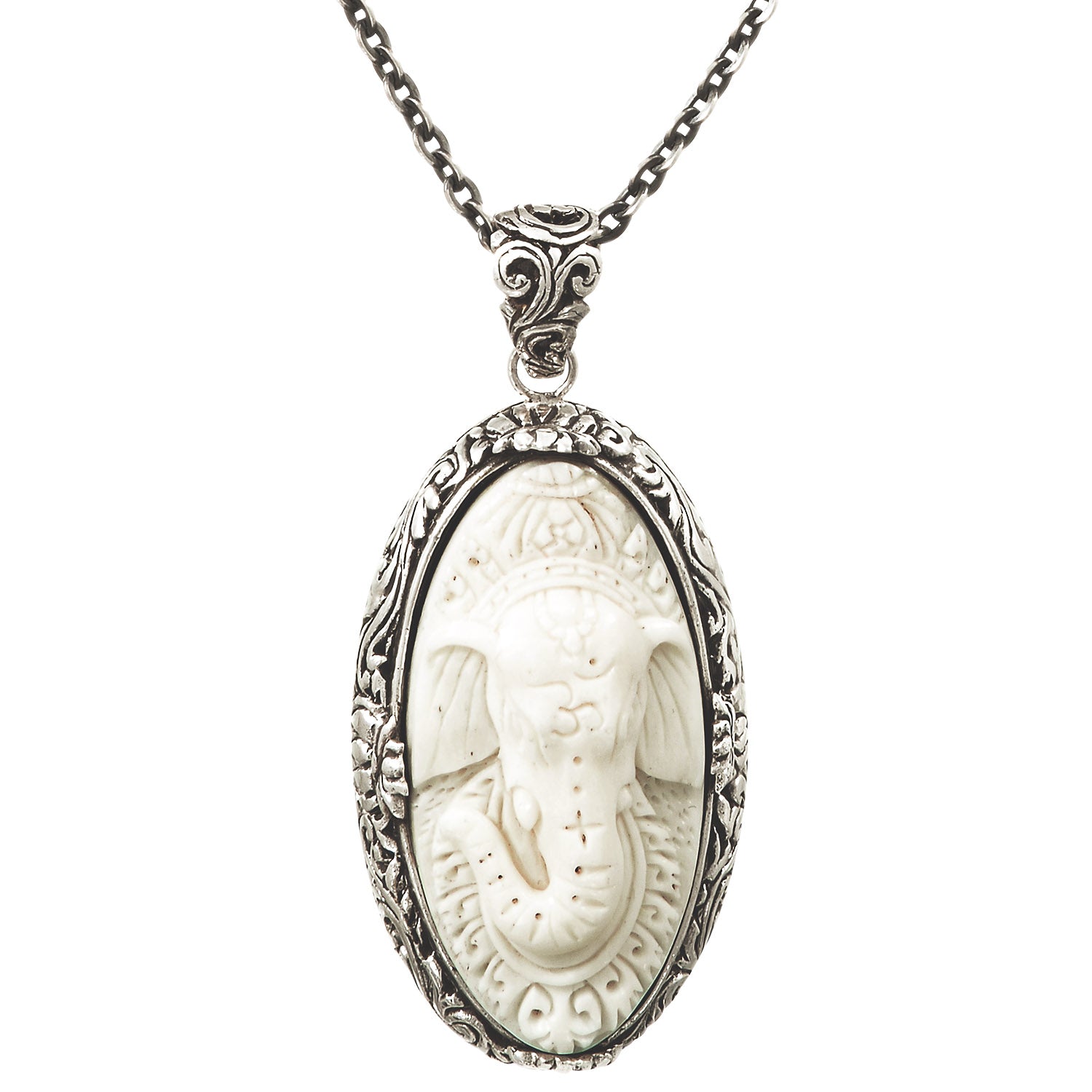
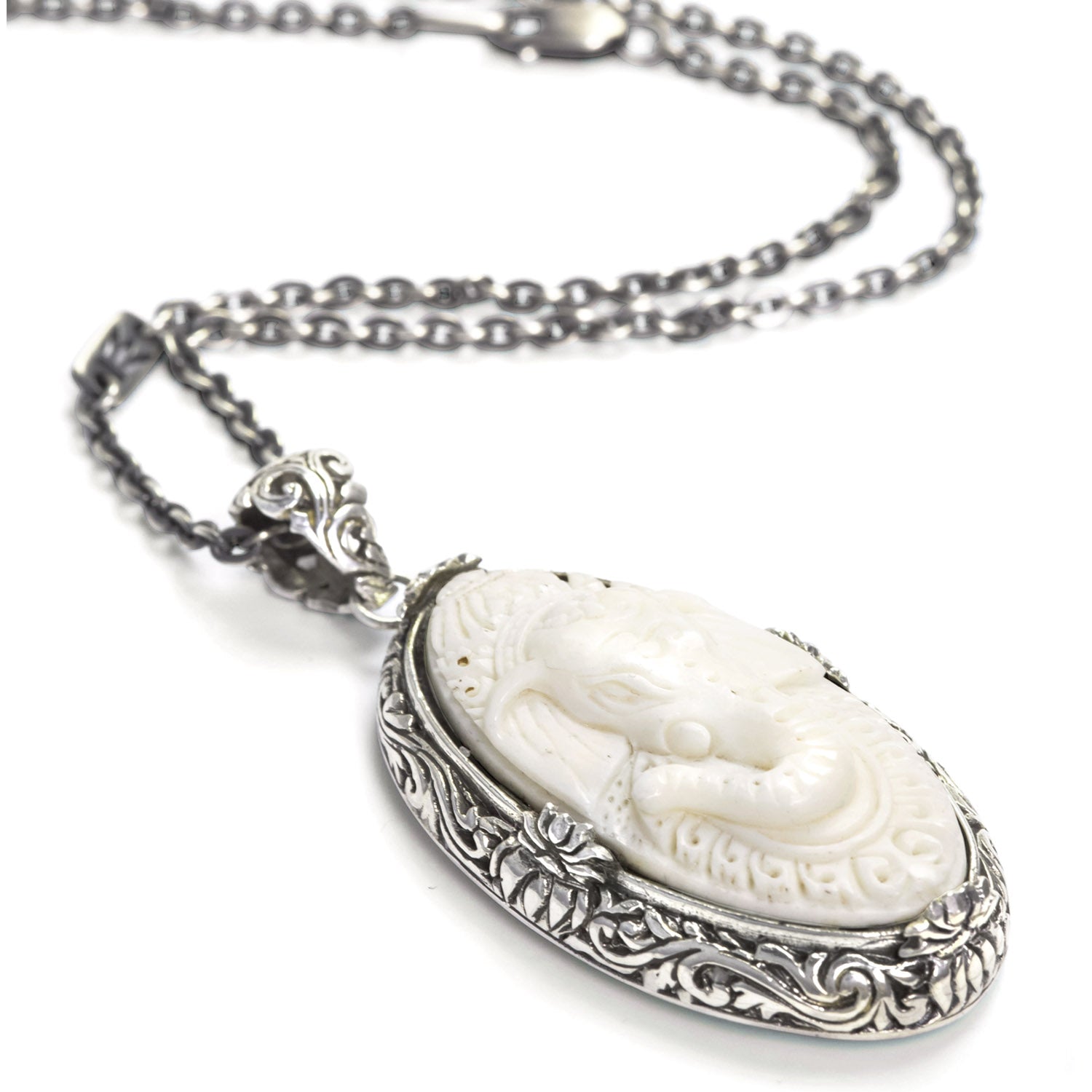
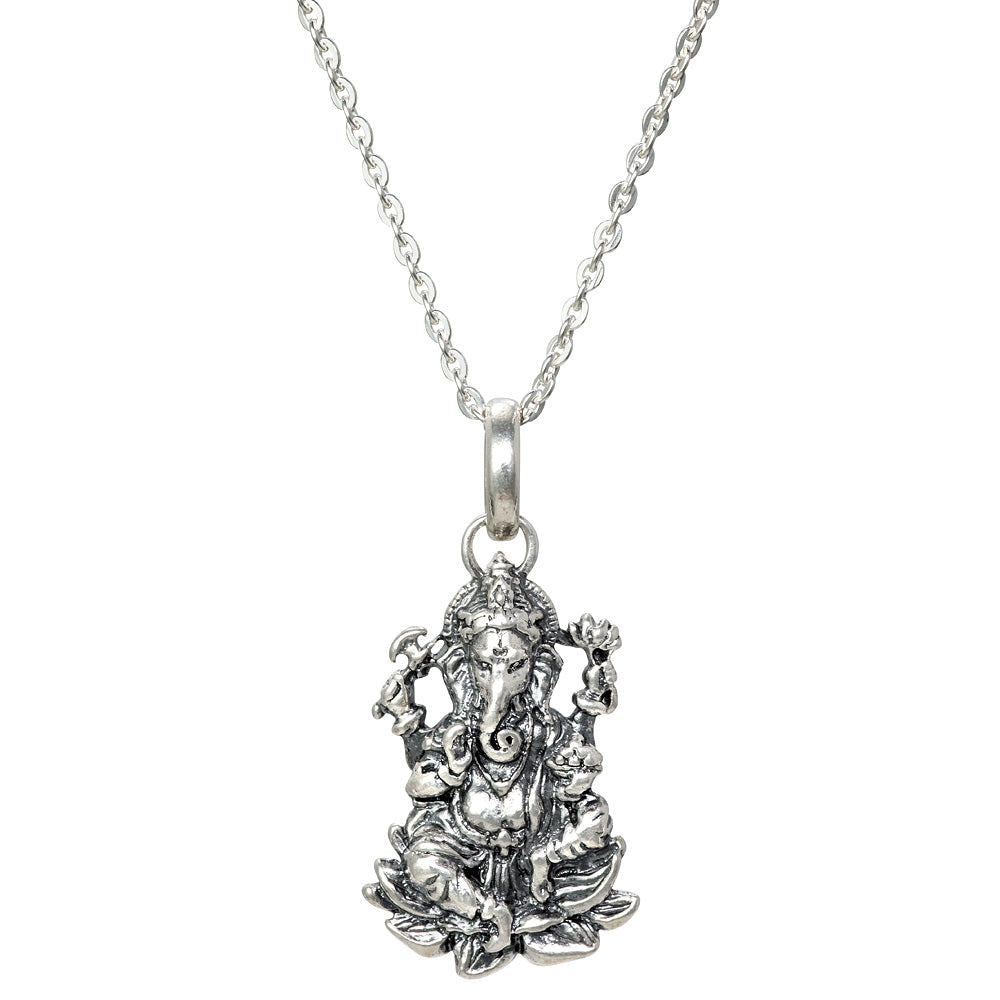
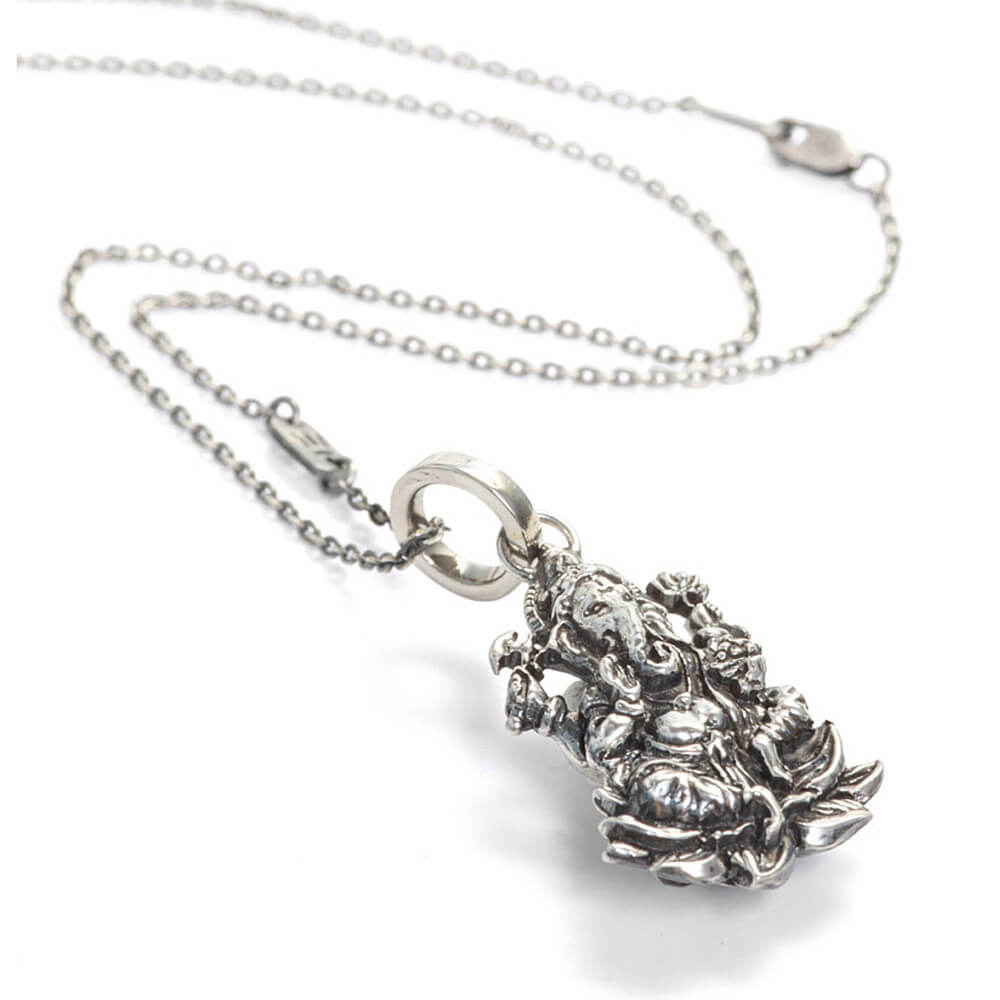
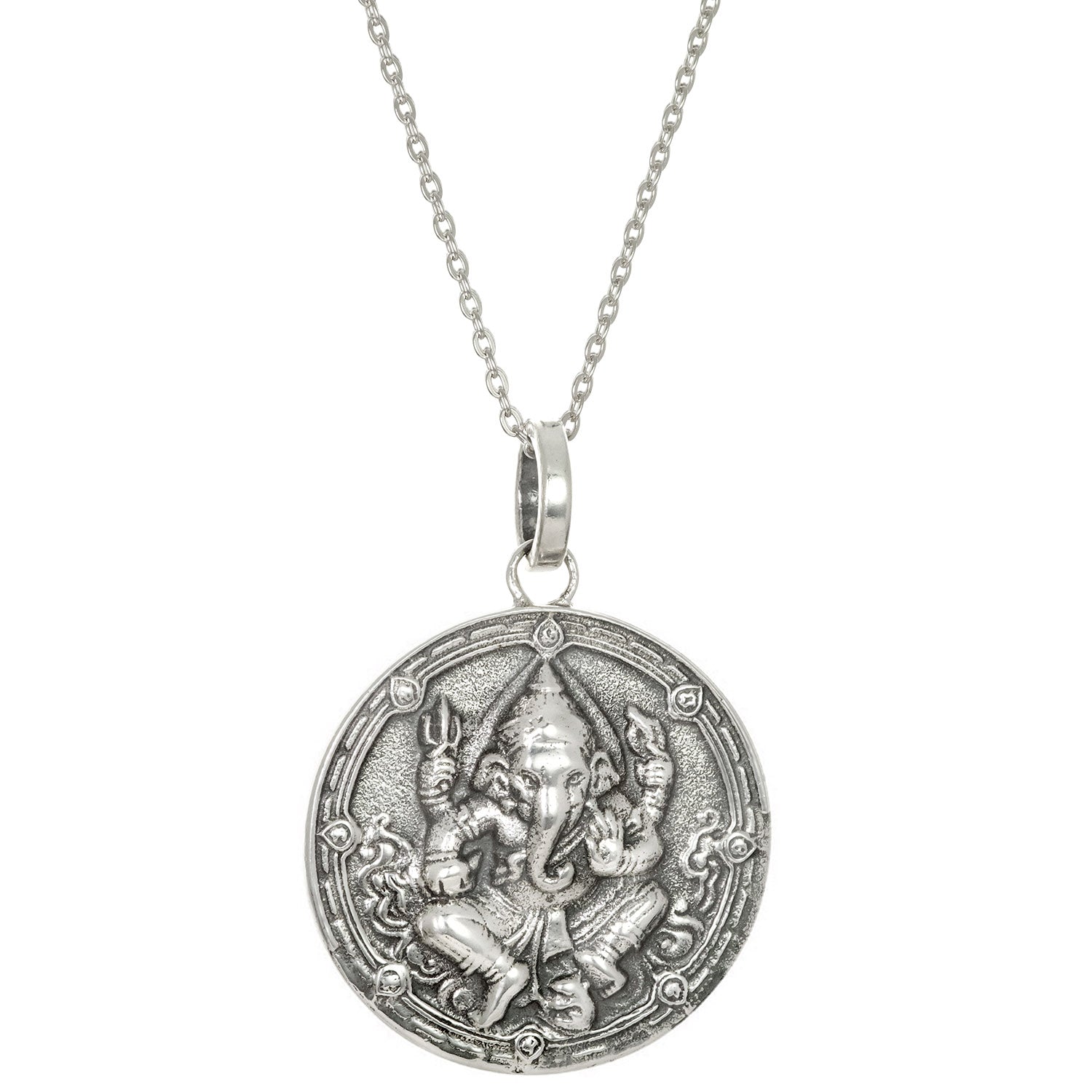
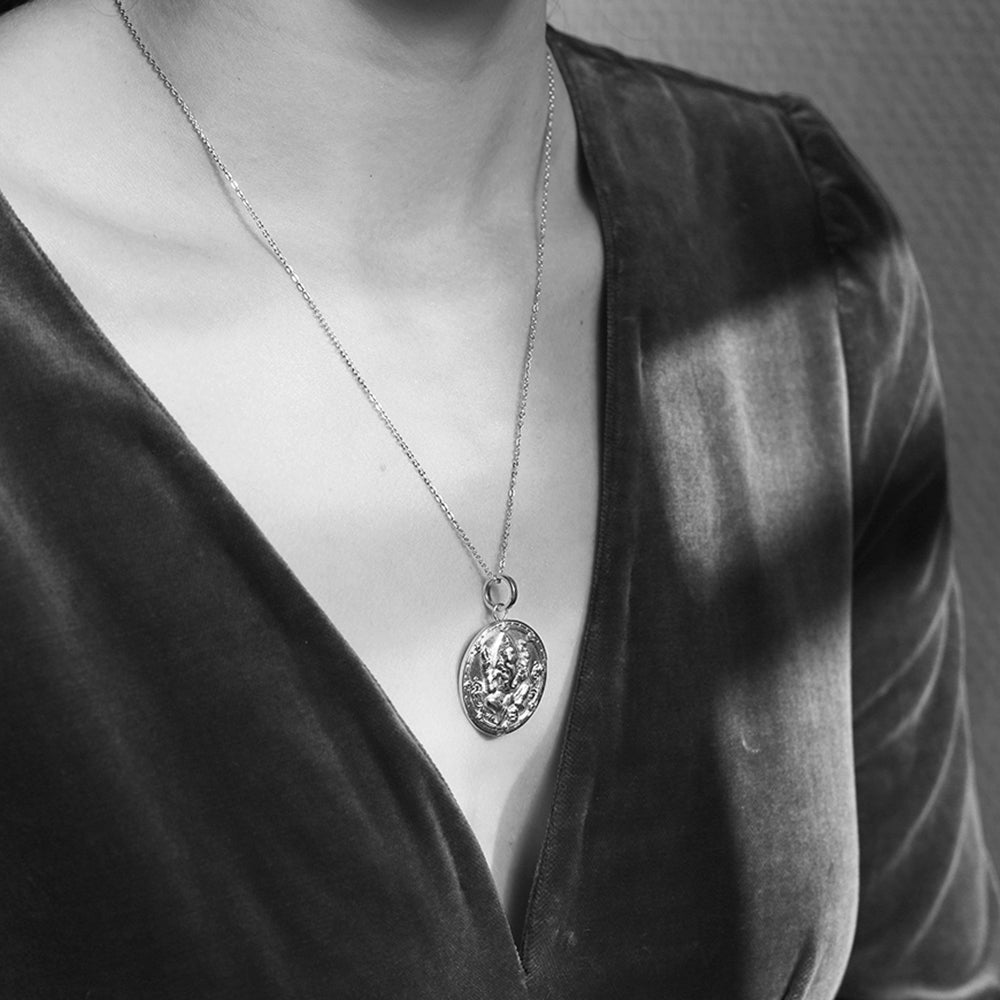


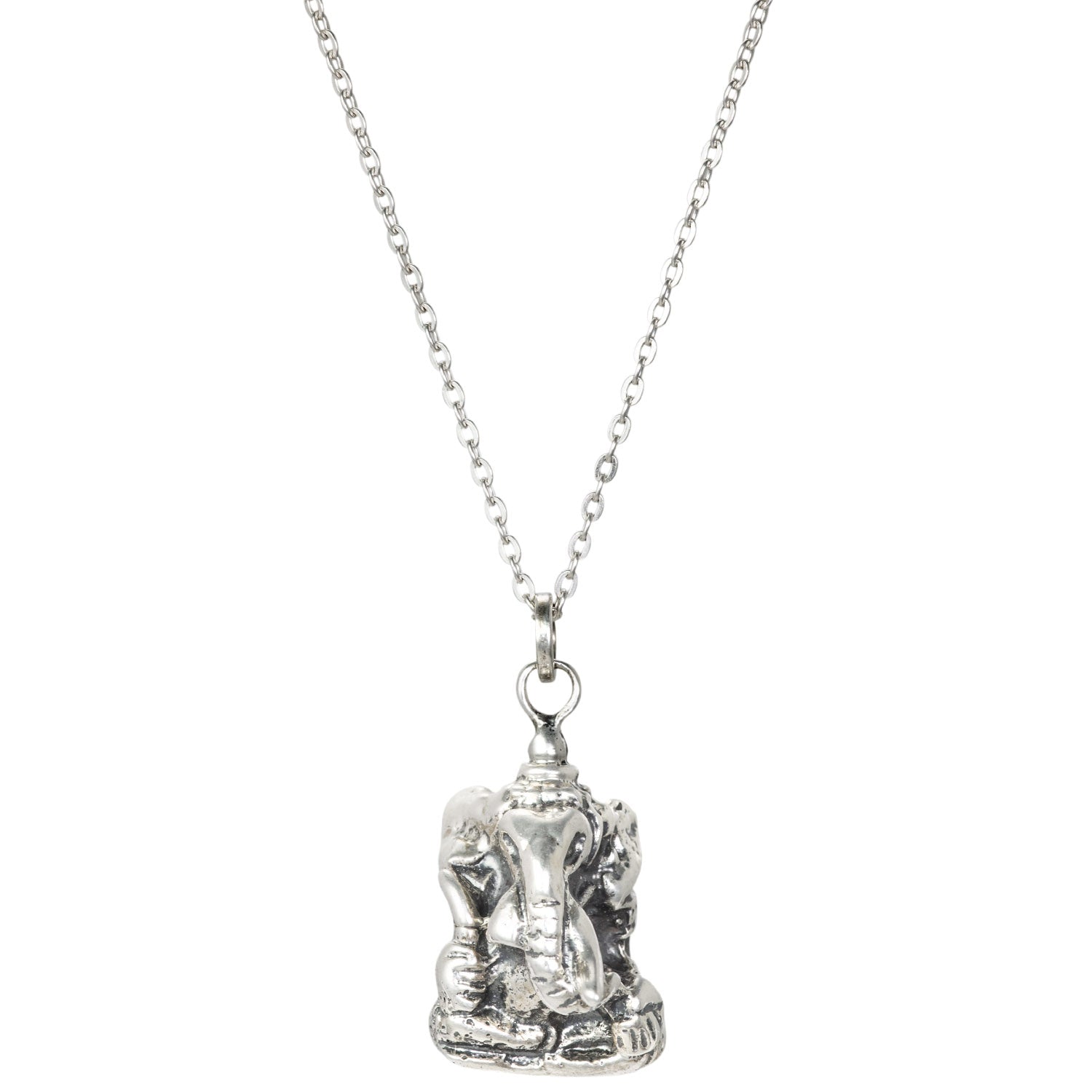
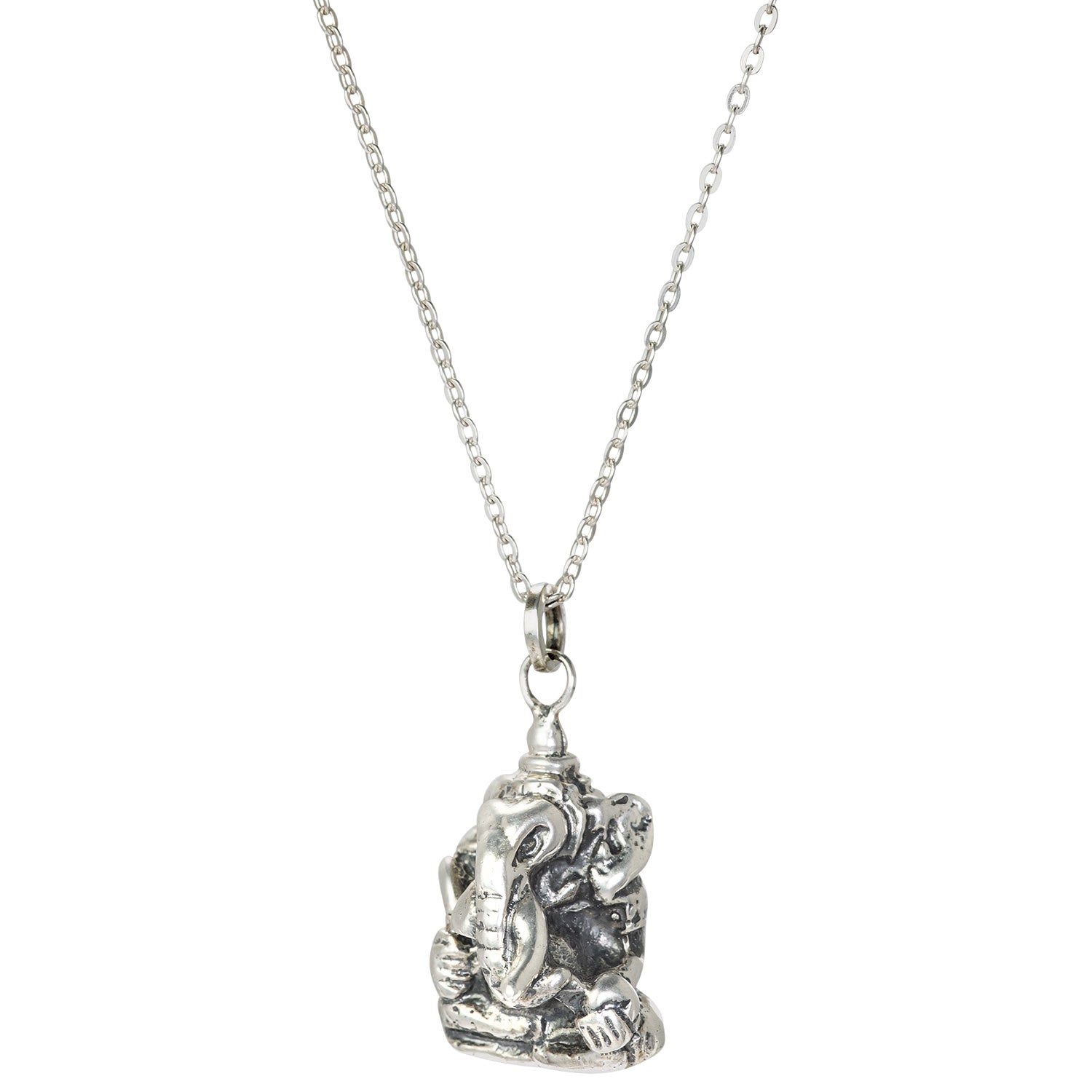


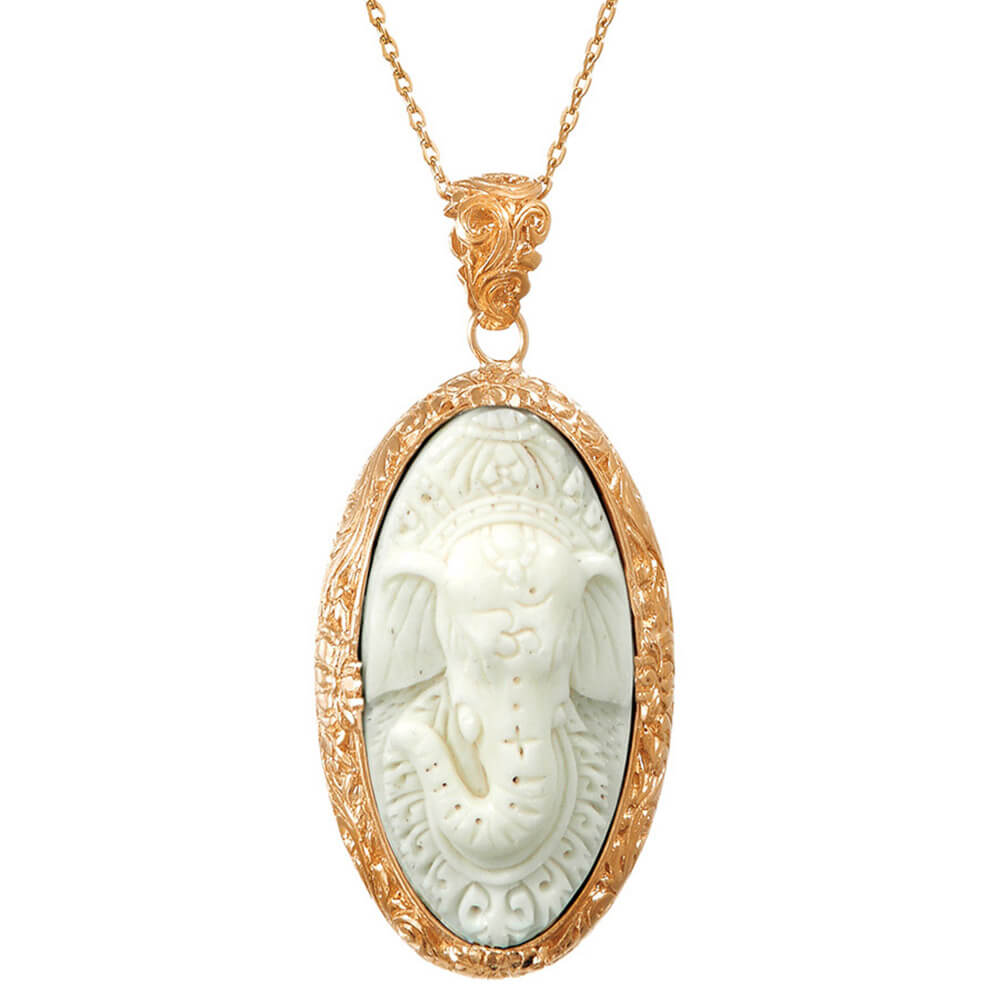
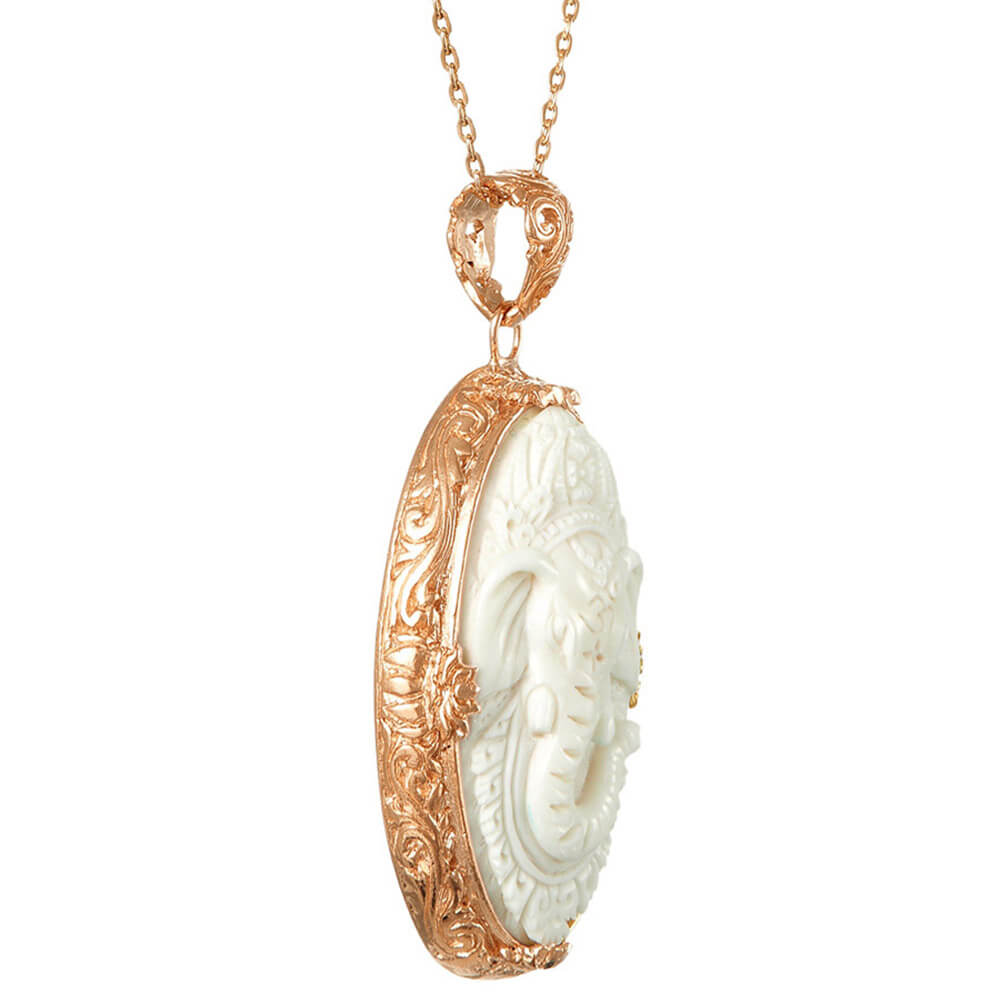
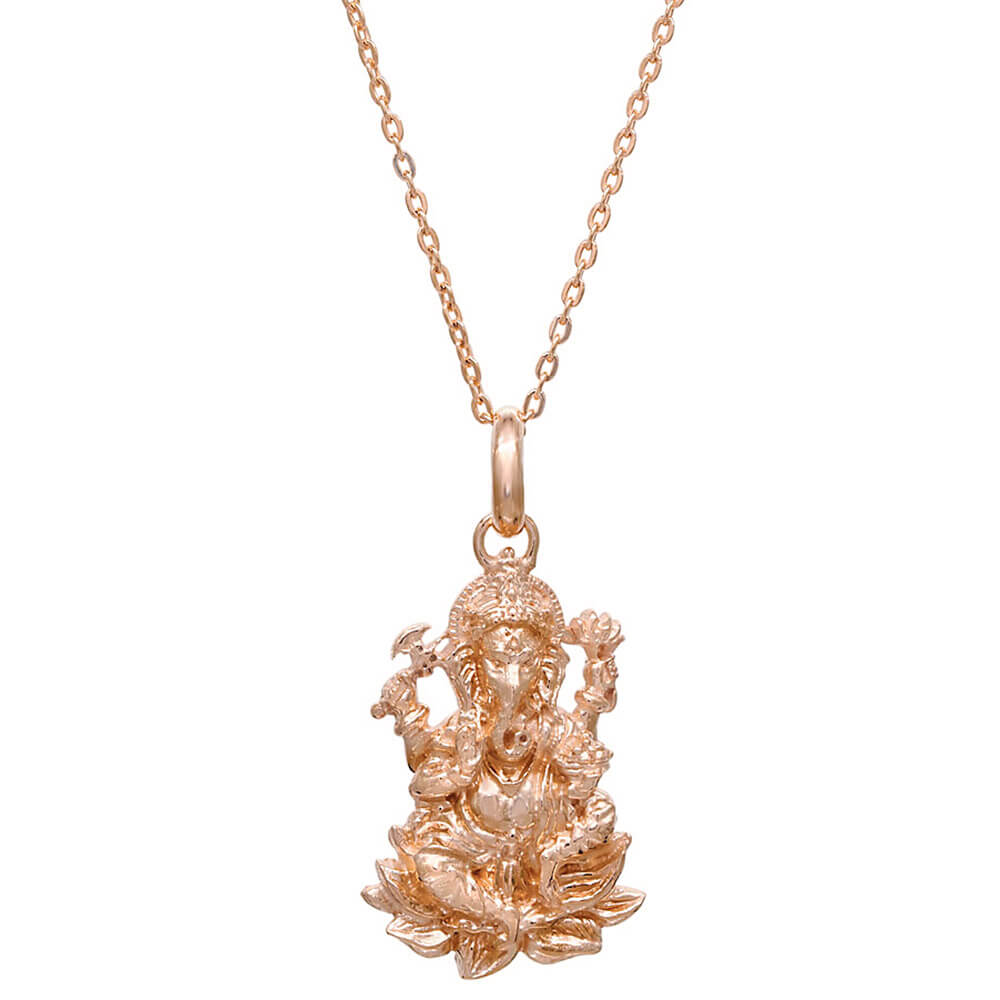
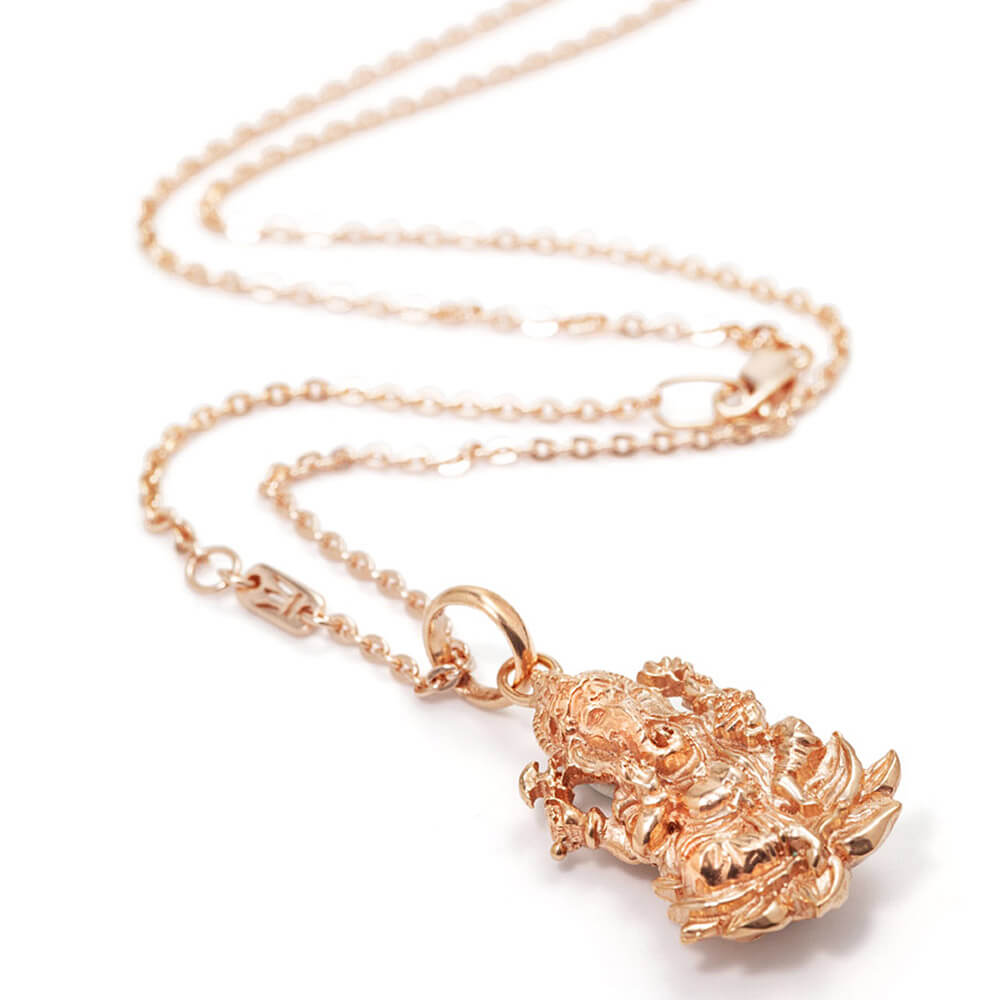
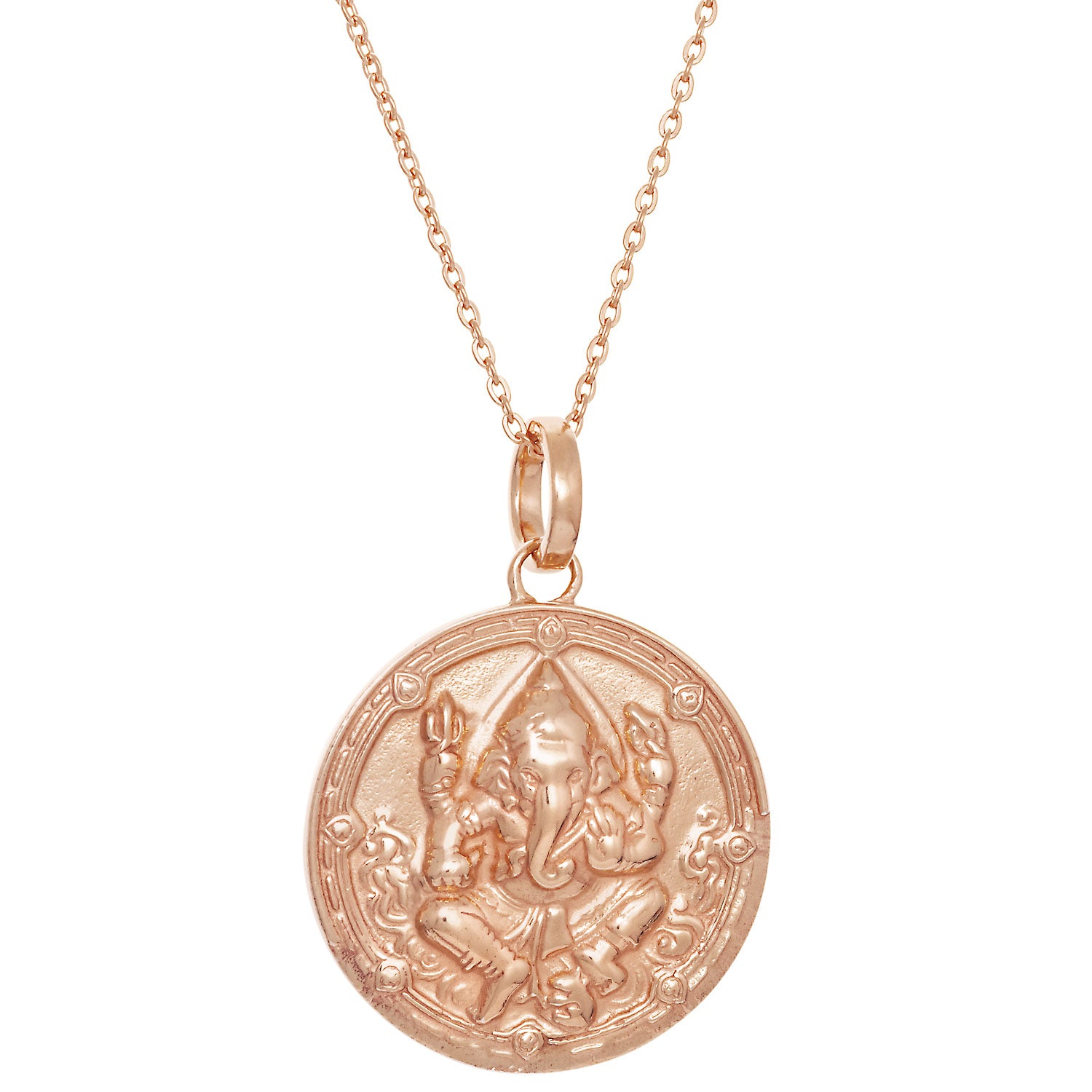
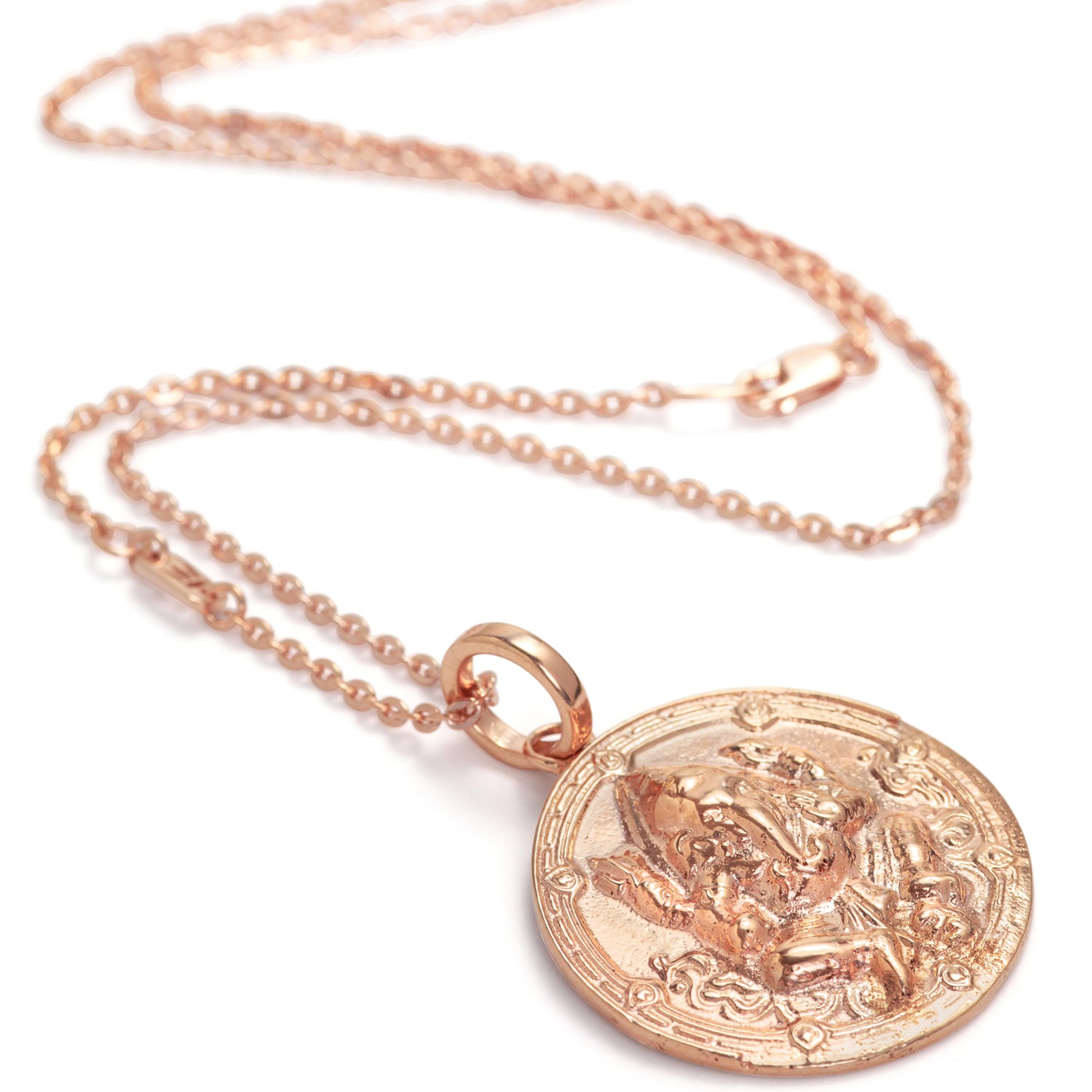
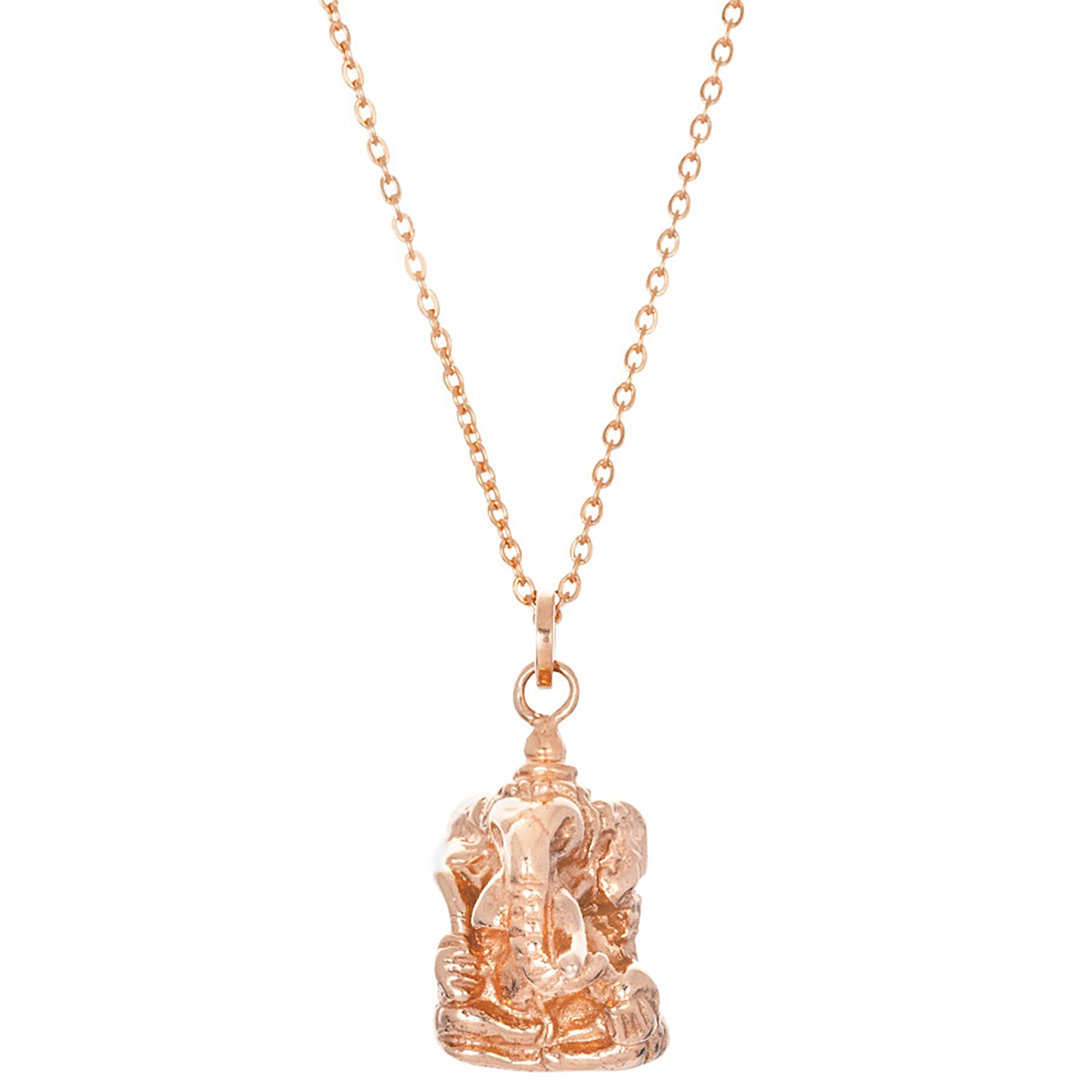
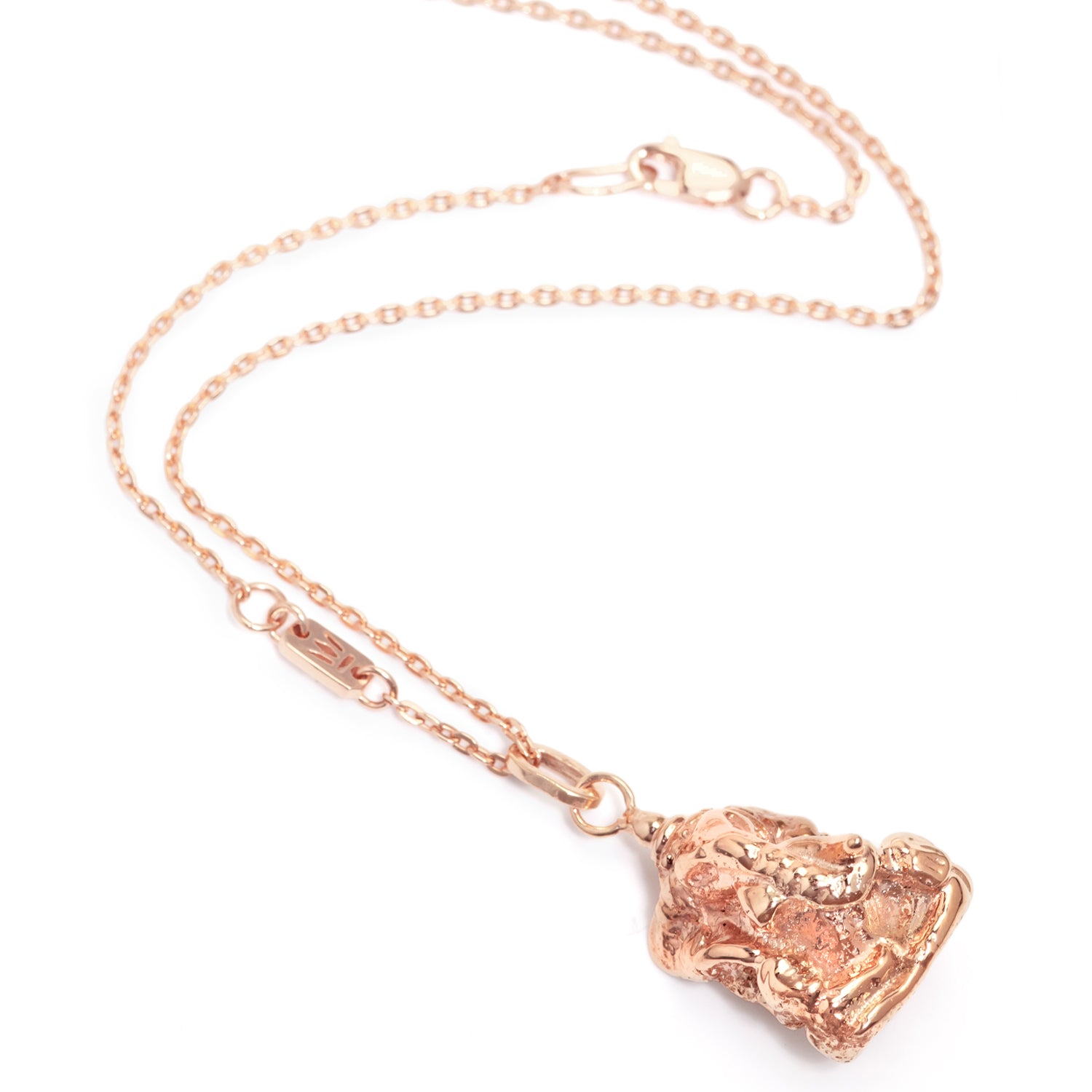
Ganesha
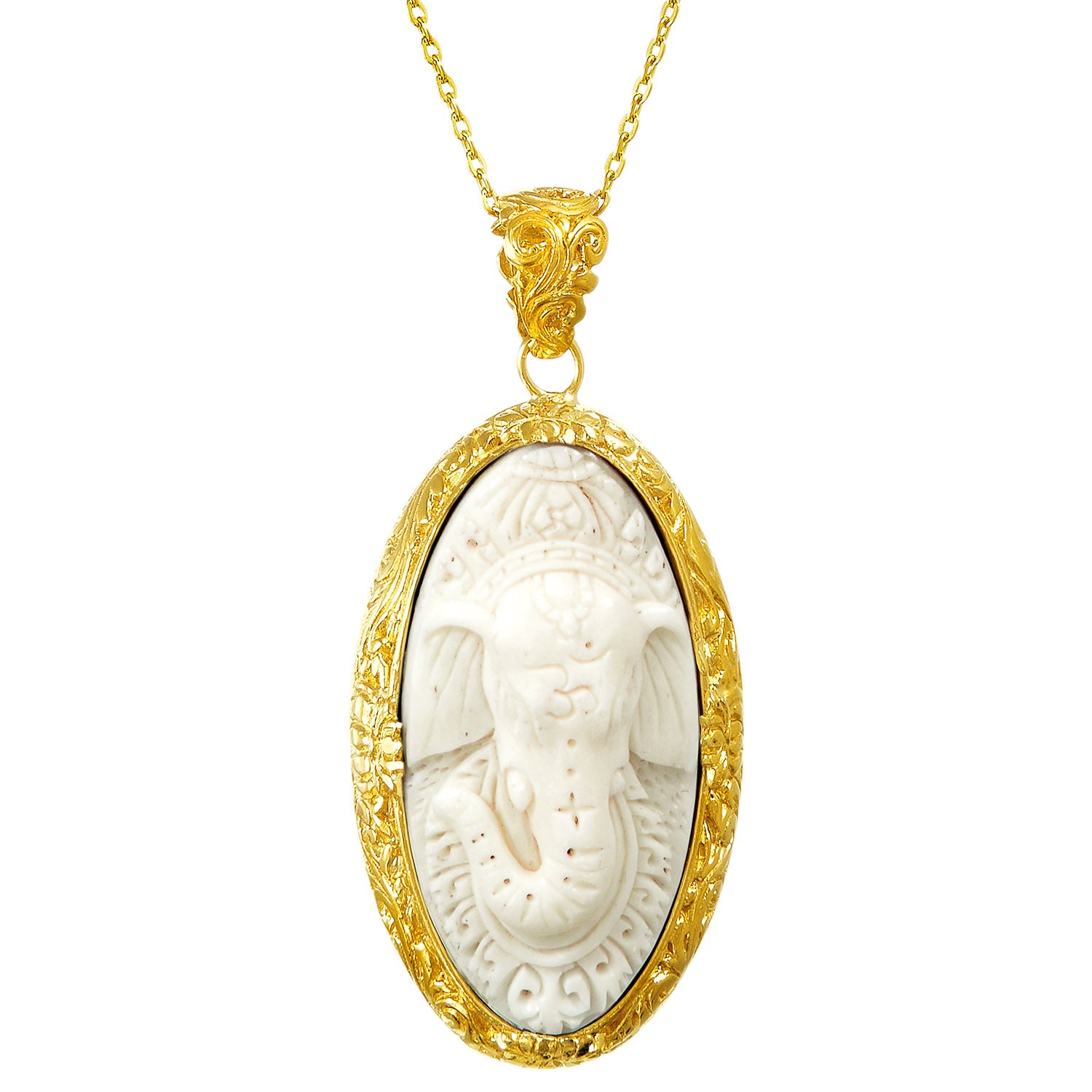
With his playful nature and all-embracing wisdom, he sets or removes obstacles. He symbolizes the aspects of success, wealth and abundance. At the beginning of a new venture, we invoke him and ask him for success. He helps us to find the right solution in life and supports us in following our own path.
The god of good fortune
Ganesha, Sanskrit: गणेश, also known as Ganapati and Vinayaka, is one of the best-known and most revered deities in the Hindu pantheon. Ganesha's kind nature and his area of responsibility make him immensely popular not only throughout Asia, but also among us as passionate yoga practitioners. He is widely revered, especially as the remover of obstacles, the protector of the arts and sciences and the deva of intellect and wisdom. As the god of beginnings, he is honored at the beginning of rites and ceremonies. Ganesha is also invoked as the patron saint of letters and learning.
Ganesha's mythological origin
Wishing to take a bath, Parvati, the consort of Shiva, created a boy out of dirt to guard her house while she bathed. It happened that Shiva returned while Parvati was not present. Surprised to see a stranger outside the house, Shiva demanded that he be allowed to enter his house. Much to his dismay, the boy refused to let him in. Enraged at being denied entry, Shiva cut off the boy's head. When Parvati returned, she was inconsolable when she learned what Shiva had done. To alleviate her suffering, Shiva ordered his retinue to bring the head of the first living being they encountered. The first living being happened to be an elephant calf. Finally, after receiving the calf's head, Shiva placed it on the boy's body and gave him back his life. This, or something similar, is how Ganesha was created.Shiva represents the divine self. Ganesha, his son, symbolizes a person who has attained this state of divinity. While Shiva represents divinity, Ganesha also embodies the path to reach this sublime state.
Ganesha's wisdom
The elephant represents both gyan shakti and karma shakti. The main characteristics of the elephant are wisdom and effortlessness. The elephant's enormous head represents wisdom and knowledge. Elephants do not go around obstacles, nor are they stopped by them. They simply remove them and move on - a sign of effortlessness. So when we worship Ganesha, these qualities are kindled within us and we embrace these qualities.Ganesha's elephant head embodies the immense wisdom of perfection. Wisdom comes from manana, independent thought and reflection. Manana can only happen when one has absorbed spiritual knowledge, i.e. the process of shravana has taken place. The big ears represent the process of absorbing shravana of spiritual knowledge with which one listens to a teacher. Even the wisest people are always open to hearing new ideas and opinions. In other words, the wise are those who keep an open mind.
Ganesha's crystal clear intellect
The trunk visually represents the well-developed intellect that emerges from wisdom, the elephant's head. Our intellect consists of two types, the gross and the subtle. The superficial intellect is used to distinguish between opposites in the visible world: black and white, hard and soft, light and heavy. The subtle intellect, on the other hand, distinguishes between right and wrong, permanent and impermanent and is colloquially referred to as consciousness. In a person who has realized the Self, this intellect is well developed; both the gross and the subtle. Such persons have clear thinking and a clear sense of right and wrong. On a relative level, even people who have made progress on the spiritual path experience this. Decisions become clear and life becomes much easier. Without clarity of thought, our worldview is inevitably confused and colored by our own biases and assumptions. Ganesha's well-formed trunk represents a crystal clear intellect that a person of perfection develops.
Transcendence
One of the most important qualities of self-realized persons is that they rise above their likes and dislikes and the pairs of opposites that the world presents to them. Grounded in permanent divinity, they remain unimpressed by what the world has to offer: the joys and sorrows, the success and loss. They understand the ways of the world and deal with life like an athlete deals with sport. They give their best in every situation and know that it is ultimately a game. Relatively speaking, true seekers on the spiritual path also achieve a sense of peace to the extent that they identify with the Self. This transcendence via the pairs of opposites (two tusks) in one person of perfection is beautifully indicated by the broken tusk of Ganesha. For it is only when we have risen above the play of opposites in the world that we can overcome the challenges that life throws at us. This idea is represented by Ganesha's large belly. It stands for generosity and total acceptance. Individuals who have attained the highest state have tremendous mental strength to push aside the greatest setbacks while keeping their head amidst immensely joyful experiences.
Posture
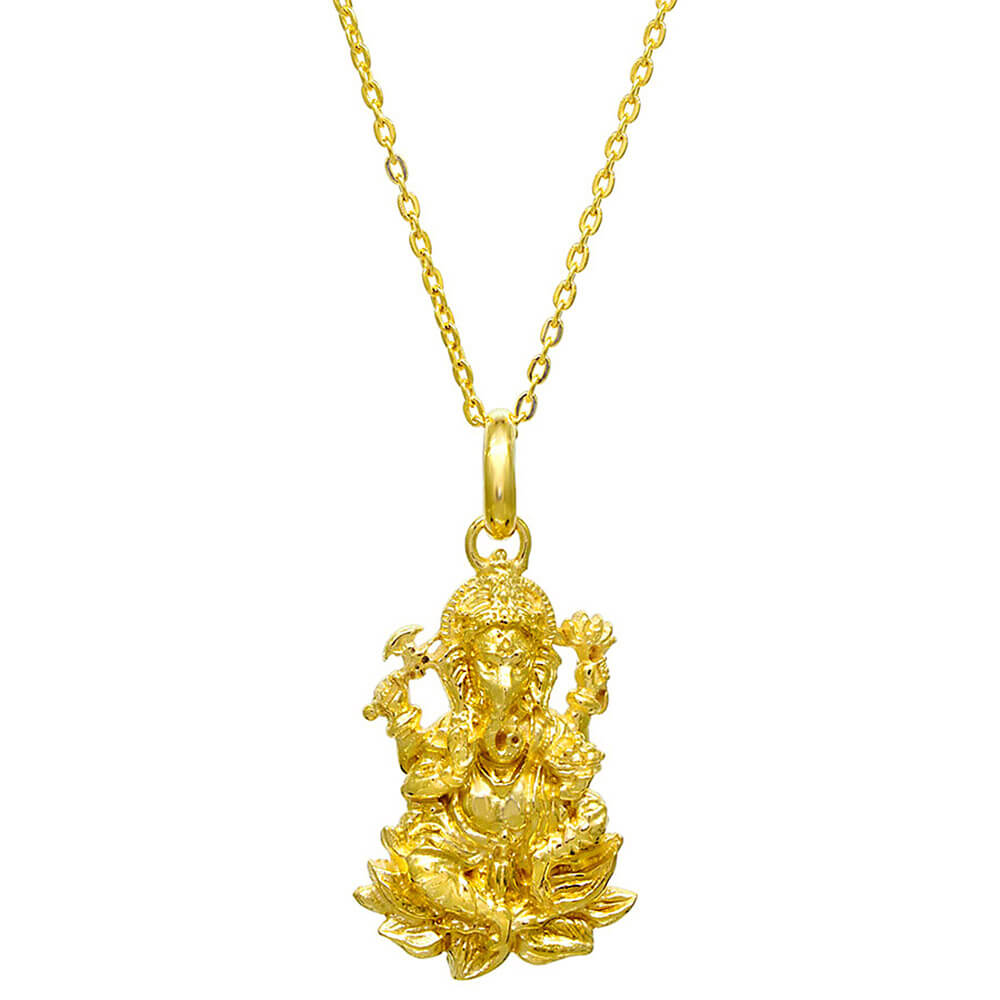
The most common posture of Ganesha is standing with one foot on the ground and the other folded up. It conveys to us that while we operate in the world, we also have a constant alignment with Atman in and through all our experiences. In the relative, whatever we do, there should be an unwavering focus on our higher spiritual goal. Without this focus, it is impossible to experience spiritual progress. Ganesha's upraised hand represents protection. It means, "Fear not, I am with you". He either holds a sweet in the other hand or his lowered hand, palm facing outwards, signifies endless giving as well as an invitation to bow down. This is also symbolic of the fact that one day we will all dissolve into the earth.
Wealth and power
The food at the feet of Ganesha symbolizes material wealth and power. With this, the Lord is subtly hinting that the world rewards those who live a life of truth. Those who become spiritual acquire merit in their respective fields of activity and those with merit rarely go unrecognized. They gain respect and wealth even though they may not desire it.
The mount
The mouse is like the mantra that can cut through the sheaths and sheaths of ignorance and lead to the ultimate knowledge represented by Ganesha! The mouse as the mount of Ganesha illustrates the challenge that a spiritual man faces when he tries to attain the knowledge of the infinite Self through the finite endowments of body, mind and intellect. Atman cannot be touched with the body, felt through emotions or understood with the intellect. It can only be attained through spiritual practice.
The attributes
In his four hands, Ganesha holds an axe, a rope, a modak (sweetened rice ball) and a lotus. The axe represents the destruction of desire. The rope is spiritual knowledge that helps us to free ourselves from samsara, the attachment to the material world. The modak symbolizes the happiness and joy that a seeker derives from spiritual experience. And the lotus stands for the divine state of self-realization that every human being, consciously or unconsciously, strives for. The lotus thrives in muddy ponds and yet stands above it all. Similarly, a person of perfection can live in the world, enjoy life and yet stand above it all by identifying with the Self.